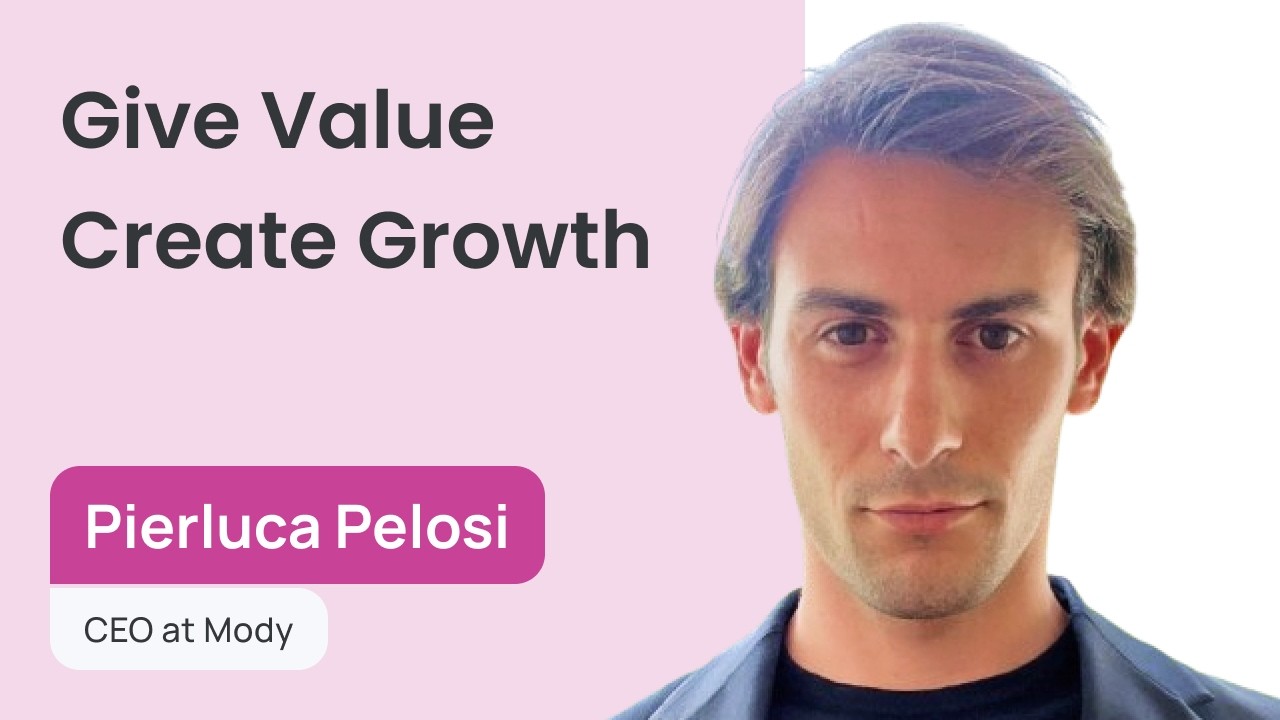
Building a successful startup often begins with identifying a simple yet widespread problem. In this interview, we speak with Pierluca Pelosi, CEO of Mody, a company transforming the online fashion shopping experience through AI-powered size recommendations. At just 26 years old, Pierluca left university to pursue an entrepreneurial vision after recognizing a major gap in the e-commerce market.
What started as an idea inspired by the challenges of finding the right clothing size online evolved into an innovative body-scanning technology capable of delivering highly accurate sizing predictions. During the conversation, Pierluca shares how emerging AI technologies helped Mody move beyond traditional questionnaire-based solutions and create a more precise approach to fit recommendations.
He also reflects on the lessons learned while building a company from the ground up and balancing education with entrepreneurship. The discussion explores the role of data, machine learning, and customer experience in solving one of fashion retail’s most persistent challenges. Join us as we uncover the story behind Mody and the vision driving the future of personalized online shopping.
From a Simple Frustration to an AI-Powered Fashion Revolution
For Pierluca, the idea behind Mody didn’t emerge from a grand business plan—it started with a common annoyance that millions of online shoppers face every day. While browsing an e-commerce website, he came across an advertisement showing someone taking a photo to determine clothing size. That small moment sparked a question: could technology make online sizing far more accurate? Curious to find the answer, he began digging deeper into the market and quickly realized that most existing solutions relied on simple questionnaires that often left customers guessing.
At the same time, Pierluca was balancing university studies and a growing entrepreneurial ambition. Although he eventually left his management engineering program to focus on Mody full-time, he doesn’t see education as something he abandoned. Quite the opposite. The mathematical and engineering knowledge he gained became a key ingredient in building the company’s technology. What began as a side project soon turned into a mission to solve one of fashion e-commerce’s biggest pain points.
The breakthrough came when Pierluca and his team looked beyond traditional statistical models. Instead of relying solely on purchase history and survey answers, they developed AI-powered body-scanning technology capable of analyzing body measurements and matching shoppers with the right fit. Over time, Mody collected more than two million body scans, creating a dataset that significantly improved prediction accuracy. Today, the platform can estimate up to 50 body measurements and recommend the correct clothing size with remarkable precision—helping both shoppers and retailers avoid costly sizing mistakes.
Everything you have done in your life will be useful

Pierluca PelosiCEO at Mody
Beyond Sizing: How Mody Is Reshaping the Entire Online Shopping Experience
For Pierluca, solving the sizing problem was never just about reducing returns—it was about fixing a much bigger issue in e-commerce. Every wrong-size purchase creates a chain reaction of costs, from shipping and handling to lost profits. According to him, sizing mistakes account for roughly half of all fashion returns, making them a serious threat to online retailers. For large brands, it means shrinking margins. For smaller stores, it can be far more damaging. "The wrong size is the death of the e-commerce," Pierluca says. By helping shoppers choose correctly from the start, Mody can reduce overall returns by around 30%, creating a win-win situation for both retailers and customers.
But the impact goes far beyond logistics. One of the most powerful benefits of accurate size recommendations is confidence. Many shoppers abandon purchases simply because they are unsure whether an item will fit. Pierluca explains that when customers feel reassured, they are far more likely to complete a purchase. That trust translates directly into business results, with Mody helping some retailers increase conversion rates by 20% to 40%. In a world where digital advertising costs keep climbing, improving conversion without spending more on marketing is becoming one of the most valuable growth strategies available.
Pierluca is already thinking about what comes next. After developing size recommendations and virtual try-on technology, his team is building an AI-powered personal shopping assistant designed to recreate the experience of having a knowledgeable sales expert by your side. Instead of relying on generic product descriptions, shoppers will receive personalized recommendations based on their body shape, measurements, style preferences, and even skin tone. The system will explain products in detail, suggest the best options, recommend the correct size, and show how items might look on the customer before they buy. In Pierluca's vision, online shopping isn't just becoming smarter—it's becoming personal.
We increase the conversion rate by 20% to 40%
Pierluca PelosiCEO at Mody
Closing the Gap Between Online Shopping and the Real Store Experience
Pierluca doesn’t see Mody as just a sizing tool anymore. The vision is growing into something much bigger: one complete package that combines size recommendations, virtual try-on, and an AI personal shopper. And while some people might assume shoppers are still hesitant about AI, Pierluca has noticed the opposite. When brands test Mody’s tools, users start engaging with them almost immediately. For him, that proves two things: people are ready for AI in fashion, and online stores still have a big service gap to fix.
That gap is what Pierluca keeps coming back to. E-commerce has been “the future” for years, but even strong fashion brands still earn only a small share of revenue online compared to physical stores. The products are there, payments are easier than ever, and customers can browse almost anything from anywhere. So what’s missing? In Pierluca’s view, it’s the human-like guidance people get in a physical shop—the advice, reassurance, and personalized help that makes buying feel easier.
His goal is to bring that same level of service into the digital world, and eventually connect it with physical stores too. Imagine shopping online, using Mody to find your size and style, then walking into a store where the assistant already knows your body shape, preferences, and what items might suit you best. That’s the future Pierluca is building: not online versus offline, but one connected shopping experience where customers feel recognized everywhere.
Don’t wait for users to buy online—give them services, and they will come
Pierluca PelosiCEO at Mody
The Reality of Building a Startup: Persistence Beats Perfection
For all the innovation behind Mody, one of Pierluca’s biggest lessons had nothing to do with AI, fashion, or technology. It was about growth. Like many first-time founders, he believed that creating a great product would naturally attract customers. Instead, he discovered a tougher reality: even the best solution can go unnoticed if nobody knows it exists. Building trust, gaining visibility, and finding the right audience turned out to be just as important as developing the technology itself. Looking back, he admits the journey followed the path he imagined—but at a much slower pace than expected.
That experience also shaped the way Pierluca thinks about customers. For him, success isn't measured by flashy features or technical achievements. The real test is simple: does the product create meaningful value? If retailers can clearly see that the benefits outweigh the cost, adoption follows naturally. It's a philosophy that has helped Mody grow steadily, and today the company is increasing its monthly revenue by around 20%. The growth may not have happened overnight, but it has reinforced his belief that sustainable businesses are built by solving real problems.
When asked what advice he would give aspiring entrepreneurs, Pierluca's answer was refreshingly straightforward. In a world filled with powerful AI tools and endless opportunities, he believes there has never been a better time to try building something new. Failure shouldn't be feared—it should be expected, learned from, and used as fuel to keep moving forward. The key, he says, is persistence. Keep improving, keep testing, and keep going, even when progress feels painfully slow. Eventually, the right path reveals itself.
Continue, continue, continue—and you'll find the right way