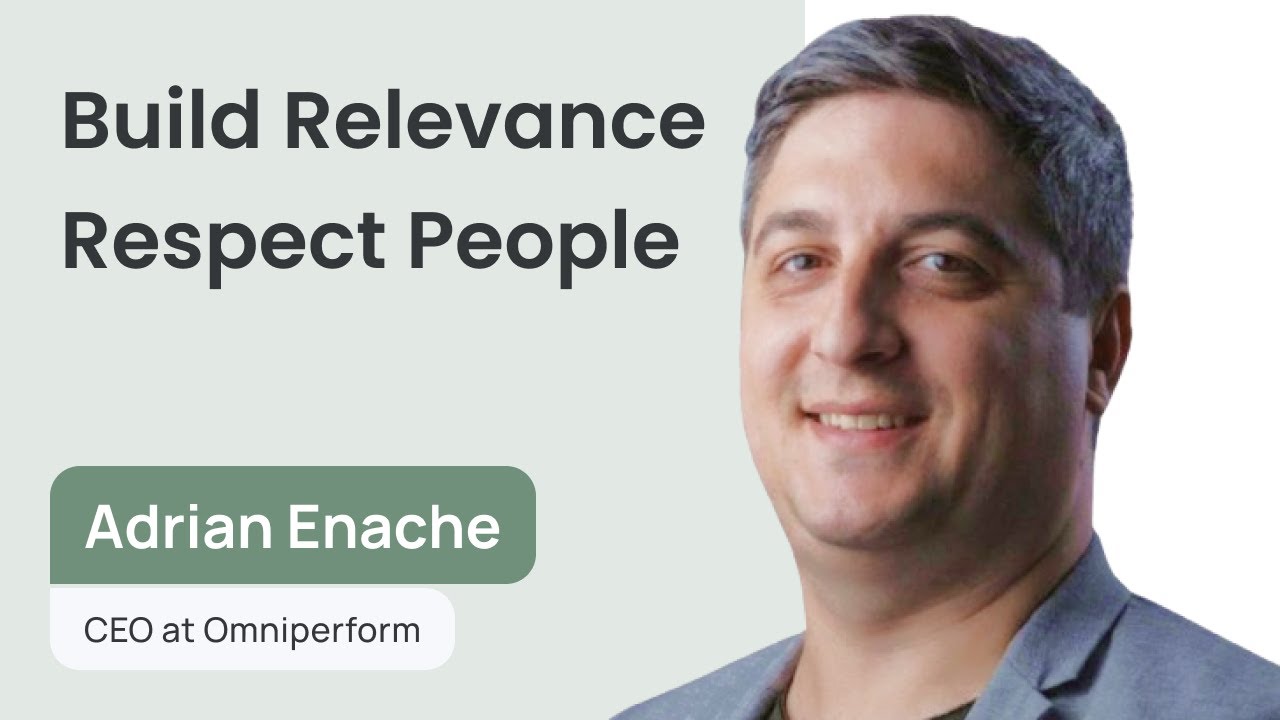
In this edition of Bright Founders Talk, we sit down with Adrian Enache, the dynamic CEO of Omniperform, a personalized communication agency with a global footprint. With a background in software engineering, Adrian’s journey from coder to business leader is both inspiring and insightful.
Today, Omniperform operates in over 120 countries and is powered by its proprietary AI algorithm for attention and personalization. In our conversation, Adrian shares how a passion for technology led him to explore the intersection of media, digital innovation, and leadership.
He also emphasizes the importance of mentorship, which he credits for transforming his personal and professional growth trajectory. Beyond awards and recognition, Adrian believes that true leadership lies in elevating those around you. Join us as we explore his philosophy on expertise, adaptability, and building high-performing teams in a rapidly evolving digital landscape.
From Code to CEO: How Adrian Found His Edge in Tech, Mentorship, and Leadership
It all started with code. Adrian was deep into software engineering, enjoying the process, getting good at it — but he had a gut feeling: this wasn’t his forever. “I loved coding, but I couldn’t do it forever,” he said with a shrug. So he pivoted. First into e-commerce, then media, then digital innovation — always chasing the next challenge. Bit by bit, client meetings replaced code reviews, and before long, he found himself not behind the keyboard, but in front of teams, leading. His journey wasn’t a straight line; it was an evolution driven by curiosity and the courage to move beyond what felt comfortable.
Adrian’s approach to growth is refreshingly honest. He doesn’t believe in being a jack-of-all-trades right away. “Everyone should be an expert in something, and then move on,” he insists. Whether it was mastering media, diving into tech, or stepping into leadership, his focus was always to go deep before going wide. And the metaphor he used? Spot on. “You’ll never love playing tennis if you suck at tennis.” The point? Love follows skill, and skill takes work. That’s the philosophy that helped Adrian build Omniperform into a company serving clients across 120 countries — not by dabbling, but by diving in.
Everyone should be an expert in something, and then move on

Adrian EnacheCEO at Omniperform
But if there’s one theme that really powered his rise, it’s mentorship. Adrian never waited around for learning to happen — he hunted it down. “Every time I got hired, my first question was: Who’s going to teach me things?” That mindset — always seeking out wisdom that books can’t teach — led him to mentors who didn’t just shape his skills, but reshaped his trajectory. And it paid off. With awards under his belt and recognition across borders, Adrian doesn’t measure success by titles or trophies. For him, real leadership is simple: “Help people become better than they were before you.”
Why 50,000 Ads Don’t Scare Adrian — And Why They Shouldn’t Scare You Either
Adrian might have a shelf full of awards, but if you bring them up, don’t expect a dramatic pause or a proud smile. He’ll probably shrug and pivot straight to the values behind his team. One of them? Humbleness. “There are always better people around the world — you should learn from them,” he says simply. That mindset isn’t just a nice leadership trait. It’s baked into how Omniperform operates — with mutual respect, constant learning, and a grounded belief that arrogance slows you down more than failure ever could.
There are always better people around the world — you should learn from them
Adrian EnacheCEO at Omniperform
Ask Adrian what Omniperform does, and he won’t throw buzzwords at you. He’ll talk about relevance. The agency helps brands create ads that people actually want to see — not skip or block. “We wanted people to enjoy advertising,” he says, and that goal turned into a full-blown mission: custom-tailoring creatives to match psychological triggers, lifestyles, and even emotional preferences. Picture this — if you're a beach-loving extrovert, you’ll get sun, laughter, and friends in your feed. If you’re more of a cozy introvert, you might see a quiet evening by the fire with a drink in hand. And behind it all? AI so sharp it’s been used by MIT and NASA.
Now, if you’re a client thinking, "Wait, you make 50,000 versions of my ad? Do I have to approve each one?" — Adrian gets the panic. But he’s quick to clear the air. “Nothing changes,” he says. The onboarding is smooth, brand books stay sacred, and his team simply plugs into your existing systems to do the magic behind the scenes. It’s personalization at scale, without the chaos. Clients just need to stay open — open to the idea that every consumer is different, and it's time advertising started treating them that way.
“It’s Not Ad Fatigue — You’re Just Annoying People”: Adrian on Why Most Campaigns Fail
If there’s one thing Adrian’s not sugarcoating, it’s this: most brands mess up paid growth by blasting generic content at everyone and hoping something sticks. He’s seen it too often — companies proudly generating thousands of creatives using AI, only to dump them across platforms with zero strategy. “You’re just attacking people with 5,000 messages and no logic,” he says. The result? Burned budgets, confused customers, and a lot of disappointed CMOs. The fix? Smarter segmentation, intentional creative matching, and a full process rethink. In Adrian’s world, personalization isn't optional — it’s the baseline.
So what actually excites him? AI, but not the gimmicky stuff. Adrian’s lit up about its potential to amplify creativity — like turning a boring bank card into a snowboard gliding down a mountain if that’s what your audience connects with. “If your brand is still annoying your consumers, you're doing AI wrong,” he says. And he's got a point. AI isn't magic, it's a tool — like electricity. It can light up your customer experience or fry it completely. The real opportunity lies in using AI not just to automate, but to truly understand and respect the moment, the mood, and the medium.
If your brand is still annoying your consumers, you're doing AI wrong
Adrian EnacheCEO at Omniperform
And speaking of mediums — yes, fridges might soon show you ads (welcome to the future). But Adrian’s take? Just because you can advertise somewhere doesn’t mean you should. His team obsessively tailors content to each platform and behavior — a YouTube ad on your phone shouldn’t look like the one on your Smart TV. Even landing pages shift tone based on time of day. “At 11 p.m., don’t blind people with a bright page,” he says. “Make it dark, make it cozy.” That level of care, from color schemes to family SUVs with sporty copy, is how you win back even the most ad-fatigued audiences. Or at least stop them from heading off to make tea.
“In Five Years, Generic Ads Will Be Extinct”: Adrian’s Vision for the Future of Marketing
TikTok still isn’t getting the love it deserves — at least not from brands, Adrian says. While many companies treat it like a trendy extra, he sees it (and video content in general) as the core of future marketing. The problem? Brands are too slow. “Just take the phone and record,” Adrian urges. Consumers are wired for video, short attention spans and all, but most companies are stuck obsessing over polished perfection. Meanwhile, those who master fast, raw, and relevant content will own the next wave. And yes, personalization will drive it all — not as an innovation, but as a standard. “In five years, no brand will have a generic campaign,” he states flatly.
But what about privacy? Adrian walks the tightrope well. Omniperform’s model is fully GDPR and California Act compliant, using behavioral clusters instead of individual data. That means brands can stay relevant without getting creepy. “We don’t want to know exactly who you are,” Adrian explains. Instead, it’s about understanding the patterns: who’s into seaside getaways and cider? Who likes quiet nights and warm fireplaces? Narrow those segments, match them with smart creative, and boom — you're personal without being invasive. Add in the rise of AI-generated content and gamification, and you've got campaigns that feel more like entertainment than interruption.
Adrian’s grounded optimism — equal parts dreamer and pragmatist — shapes both his leadership style and vision for Omniperform. From dynamic landing pages that shift based on time of day to AI agents guiding older users through a purchase, everything is designed to meet people where they are, not force them into a one-size-fits-all funnel. And as for advice to aspiring founders? “Find a team that complements you — you can’t do it all. Then find mentors who’ve already done it.” It's refreshingly practical in a world full of overnight success myths. Adrian’s betting on a future where ads feel more like conversation than persuasion — and honestly, we’re here for it.
Find a team that complements you — you can’t do it all. Then find mentors who’ve already done it