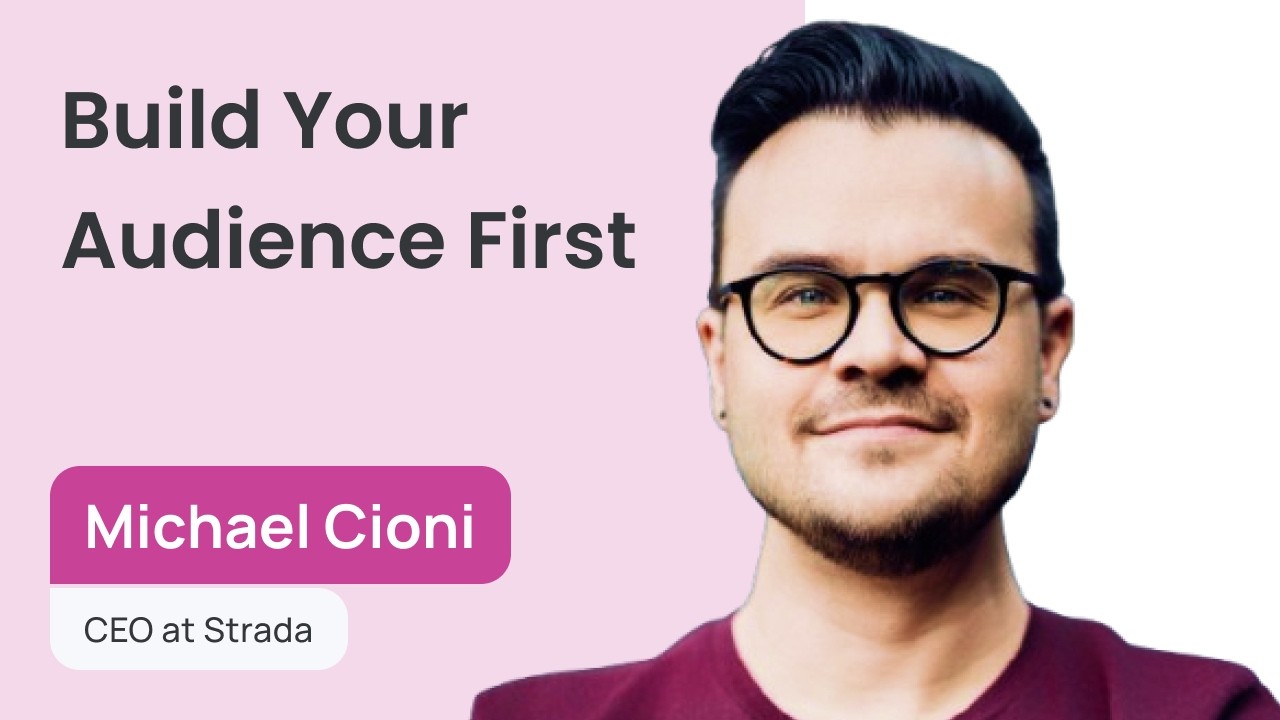
Michael Cioni has built his career at the point where filmmaking, technology, and entrepreneurship meet. As CEO and co-founder of Strada, he is now focused on creating smarter tools for the next generation of creative professionals. Before launching the company, Michael spent more than two decades in Hollywood, contributing to major productions such as “Avatar”, “Pirates of the Caribbean”, “Spider-Man”, and “The Social Network”.
His expertise became especially valuable during the industry’s complex transition from traditional film to digital production. That experience taught him that the most meaningful innovations often solve problems that are easy to understand but difficult to notice. Michael believes successful founders need a high tolerance for discomfort, a deep understanding of their customers, and the courage to challenge established practices.
He also sees independent creators as powerful drivers of innovation because they can experiment quickly, avoid corporate bureaucracy, and provide direct feedback as both buyers and users. In this episode of Bright Founders Talk, Michael shares his approach to problem-solving, explains how AI can support rather than replace human creativity, and explores the future of filmmaking in an increasingly digital world.
The Best Problems Are Hiding in Plain Sight
Michael’s career accelerated during one of Hollywood’s biggest technological shifts: the move from traditional film to digital production. While experienced filmmakers were masters of their craft, many needed help navigating an unfamiliar digital world. Michael stepped into that gap, working on major productions such as “Avatar”, “Pirates of the Caribbean”, “Spider-Man”, and “The Social Network”. Instead of resisting the industry’s growing pains, he learned to live with them, understand them, and turn them into opportunities.
That experience shaped his approach to entrepreneurship. Michael believes founders do not always need to search for incredibly complex problems; the strongest opportunities are often obvious once someone finally points them out. The real challenge is noticing them before everyone else does. When people respond to an idea by asking, “Why didn’t anyone think of that before?”, it is usually a strong sign that the founder has discovered something worth pursuing. Solving one genuine problem also tends to reveal the next, creating a continuous journey of listening, learning, and improving.
Independent creators are especially well positioned to embrace this mindset because they can experiment without waiting for layers of approval. Unlike traditional studios, where the people buying technology may never actually use it, creators are often both the customer and the user. They can test a new camera, editing platform, or AI tool and immediately decide whether it adds real value. Michael sees AI in the same practical way: not as a replacement for human creativity, but as a tool for handling tasks such as scheduling, budgeting, and analysis so filmmakers can spend more time telling authentic stories.
The best problems are easy to understand but hard to see

Michael CioniCEO at Strada
The Real Movie Happens Below the Surface
The cameras, actors, explosions, and beautiful shots may be what audiences notice, but Michael says they are only the tip of the filmmaking iceberg. Beneath every exciting scene sits a mountain of schedules, contracts, payroll, location planning, negotiations, and spreadsheets. It may not look glamorous, yet none of the creative work reaches the screen without it. The repetitive, behind-the-scenes tasks are not separate from filmmaking—they are what make filmmaking possible.
That is exactly where Michael believes AI can deliver the most value. Instead of trying to replace the storyteller, it can act like an assistant that handles repetitive work, brings order to chaotic productions, and gives creative teams more breathing room. Used well, AI could help filmmakers complete more projects, reduce stress, and perhaps even get a little more sleep. The goal is not to remove people from the process, but to help talented people scale themselves without drowning in administration.
After contributing to more than 150 films, Michael’s biggest lesson is to challenge the status quo more aggressively. New ideas often begin as fads, grow into trends, and eventually become industry standards—and the people who recognize that shift early gain a serious advantage. They build experience, relationships, knowledge, and confidence before everyone else catches up. For entrepreneurs, the message is clear: when you spot something with the potential to become the new standard, do not stand at a safe distance—lean into it.
Challenge the status quo—and push further
Michael CioniCEO at Strada
Build Your Band Before Your Blockbuster
Michael believes the old networking rule has changed. It is no longer only about who you know—it is about who knows you. Social media has removed the need to live in Hollywood just to enter the conversation, giving filmmakers the chance to share their work, connect with collaborators, and build a reputation from almost anywhere. The real value of networking, though, is not collecting contacts. It is finding talented people who challenge you, improve your ideas, and help you “fail up” instead of making the same mistakes alone.
He compares the process to playing in a band: you never want to be the strongest musician in the room. Michael has always tried to surround himself with people who are better than he is because that creates pressure to learn, adapt, and raise the quality of the work. A solopreneur can only compare today’s performance with yesterday’s, but a strong team provides new standards, skills, and perspectives. Just like every member of The Beatles brought something different, the best creative teams are built from people whose strengths fill one another’s gaps.
For young filmmakers, that team should grow alongside experience—not around an oversized first project. Michael warns against learning the basics and immediately trying to make a feature film, comparing it to riding a bicycle for the first time and entering the Tour de France the next morning. Rather than spending everything on one ambitious production, he recommends making dozens of small, imperfect films with a phone and a computer. Every short project teaches another lesson, reveals another weakness, and makes it clearer whether the next person you need is a better actor, editor, cinematographer, or lighting expert. Start small, make mistakes quickly, and assemble the right band before trying to fill the stadium.
It’s no longer who you know—it’s who knows you
Michael CioniCEO at Strada
Build the Audience Before the Film
The Beatles did not become legendary by stepping straight onto the world’s biggest stages. They spent years playing rough venues, repeating songs, making mistakes, and sharpening their craft far away from the spotlight. Michael sees the same pattern in filmmaking and entrepreneurship: the visible success is only the tip of the iceberg. What creates great work is usually hidden underneath—hundreds of imperfect attempts, long hours, uncomfortable lessons, and projects nobody remembers.
The challenge is knowing whether those struggles are helping you improve or simply keeping you trapped. Michael warns founders and creators about the sunk cost fallacy—the belief that because you have already invested time, money, or emotion into something, you must continue. Walking away requires honest data, trusted people outside the project, and enough humility to hear that your idea may not be working. He learned that projecting too much confidence can silence the people closest to you, which is why constructive criticism should never be confused with a personal attack. Without honest feedback, there is no reliable way to grow.
Michael applies that same logic to releasing a film. Instead of finishing a project and then desperately searching for viewers, he suggests reversing the process: begin by building an audience, learning what people respond to, and discovering what makes your voice worth following. Publish small stories, experiment on social platforms, and pay attention to genuine engagement. By the time you are ready to create something bigger, you will already have the experience, team, discipline, and audience needed to give it a real chance.
Become interesting first, then make the film